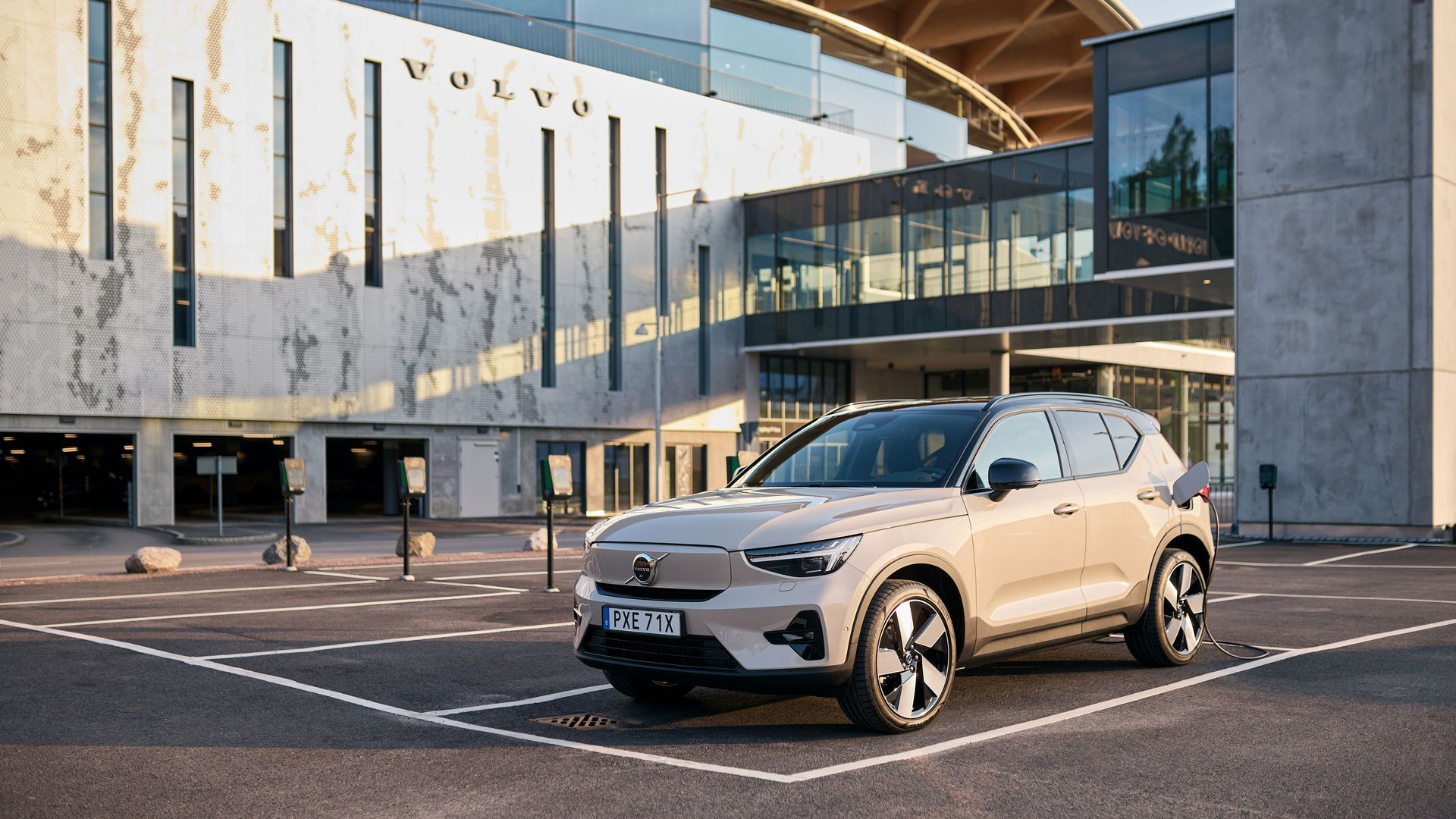
Safety: where Volvo stands apart structurally
The Volvo EX60 comes standard with the multi-adaptive safety belt — a world-first technology on the EX60 that dynamically adjusts belt tension and load limiters based on the occupant’s body type, the angle of impact, and the severity of the collision.
The system is also designed to receive over-the-air (OTA) updates.
Volvo’s IntelliSafe systems are standard across all versions and include:
- Automatic emergency braking in city environments
- Pedestrian and cyclist detection
- Pilot Assist with assisted lane changes
- Connected Safety technology
The thermoformed boron steel safety cage of the SPA3 platform builds on Volvo’s structural safety expertise, validated through more than 80,000 real-world accidents recorded in the Volvo Cars Safety Centre database.
The Tesla Model Y also offers a comprehensive driver-assistance suite.
Autopilot comes standard, with Full Self-Driving capability available by subscription.
The previous generation of Model Y achieved a 5-star NHTSA safety rating.
However, the Model Y’s seat belt system uses fixed-force load limiters and does not adapt to the occupant’s body shape in the same way as Volvo’s multi-adaptive safety belt technology.
The Montreal reality: how these two vehicles perform differently here
Two specific realities in Montreal influence this decision more than almost anywhere else in Canada.
1. Winter conditions and their impact on range
Between November and March, freezing temperatures reduce the range of every electric vehicle — typically by 25% to 40%, depending on cold severity, heating usage, and driving speed.
On Highway 117 toward the Laurentians on a Friday evening in January, the difference between 514 km and 542 km of rated range becomes less important than the vehicle’s ability to efficiently precondition its battery and quickly recharge at the next stop.
The EX60 uses Breathe Charge software, which learns your driving habits and accelerates fast charging in cold conditions by up to 30%, according to Volvo Cars.
The Model Y benefits from years of real-world data collected in Quebec and has proven thermal management in Canadian winters.
2. Charging access in the Montreal region
Tesla’s Supercharger network remains the most extensive fast-charging network in Quebec, covering major routes such as:
- Highway 15
- Highway 40
- Downtown Montreal
- Laval
- South Shore
Both vehicles now have native access through the NACS charging port.
On Décarie Boulevard or Highway Décarie, this means that access to fast-charging infrastructure no longer creates a meaningful advantage for one brand over the other.
What the Tesla Model Y does better
This comparison would not be complete without acknowledging where the Tesla Model Y has clear advantages.
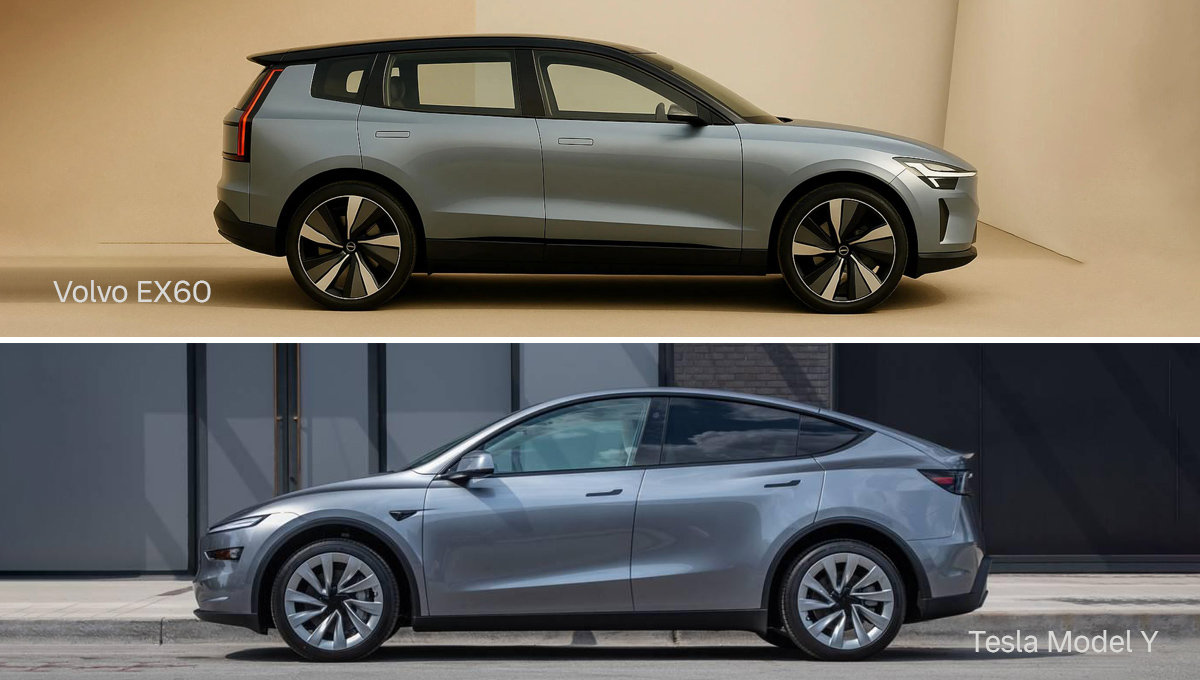
The Tesla Model Y Premium AWD is priced at $64,990 — which is $12,510 less than the EX60 Plus at $77,500.
For buyers who prioritize a lower entry price into the electric SUV segment and the maturity of a vehicle with years of real-world data in Quebec, this price difference is significant.
The Model Y also offers:
- More interior cargo space
- 854 litres compared with 560 litres for the EX60
- An optional third-row seat
- A well-established charging ecosystem
- Frequent software updates
- A proven resale value in Quebec’s used vehicle market
These are concrete advantages that a newly launched model like the EX60 cannot yet claim.
FAQ: EX60 vs Model Y in Canada
Is the Volvo EX60 eligible for the federal EVAP program in Canada?
No.
The EVAP program requires a total transaction price below $50,000, excluding taxes and fees.
The EX60 Plus starts at $77,500, which places it well above the eligibility threshold.
The Tesla Model Y Standard ($49,990) is the only one of the two eligible for the EVAP incentive, with a potential $5,000 rebate.
The AWD versions of the Model Y also exceed the price limit and are not eligible.
Is the EX60’s 514 km range officially certified by NRCan?
Not yet.
Volvo Canada explicitly states that the 514 km figure for the P10 AWD is a preliminary estimate based on NRCan testing cycles.
Official NRCan ratings will be released at a later date.
These results are not guaranteed.
The Tesla Model Y Premium AWD’s 542 km range is based on EPA testing cycles in the United States. NRCan ratings are generally slightly different.
Do both vehicles have access to Tesla’s Supercharger network in Canada?
Yes.
The EX60 is the first Volvo equipped with a native NACS port as standard, providing direct access to Tesla’s Supercharger network without an adapter.
The Model Y uses the same charging port.
This creates charging infrastructure parity and removes one of Tesla’s historical advantages in this segment.
Which vehicle charges faster in Quebec winter conditions?
The EX60 uses an 800-volt architecture and Volvo’s Breathe Charge software, which manages battery temperature in cold conditions and improves fast-charging performance.
The Model Y benefits from years of real-world Canadian winter data and proven thermal management.
Both vehicles require battery preconditioning before a fast-charging session in winter.
When navigating to a charging station, both systems automatically manage this preparation process.
Does the EX60 have Apple CarPlay?
Yes.
Wireless Apple CarPlay is standard on all EX60 versions.
The Tesla Model Y does not offer Apple CarPlay, as Tesla relies on its own integrated operating system.
For drivers deeply invested in the Apple ecosystem, this represents a practical daily difference.
Which one is the better choice for a Montreal family with children?
It depends on priorities.
The EX60 offers:
- Standard multi-adaptive safety belt technology
- Available integrated booster seats
- Pilot Assist with assisted lane changes
- A documented passive safety architecture
The Model Y offers:
- More interior space
- Optional third-row seating
- A significantly lower purchase price
Both are strong choices.
The decision ultimately comes down to whether the priority is structural safety innovation and premium refinement or space, flexibility, and budget value.