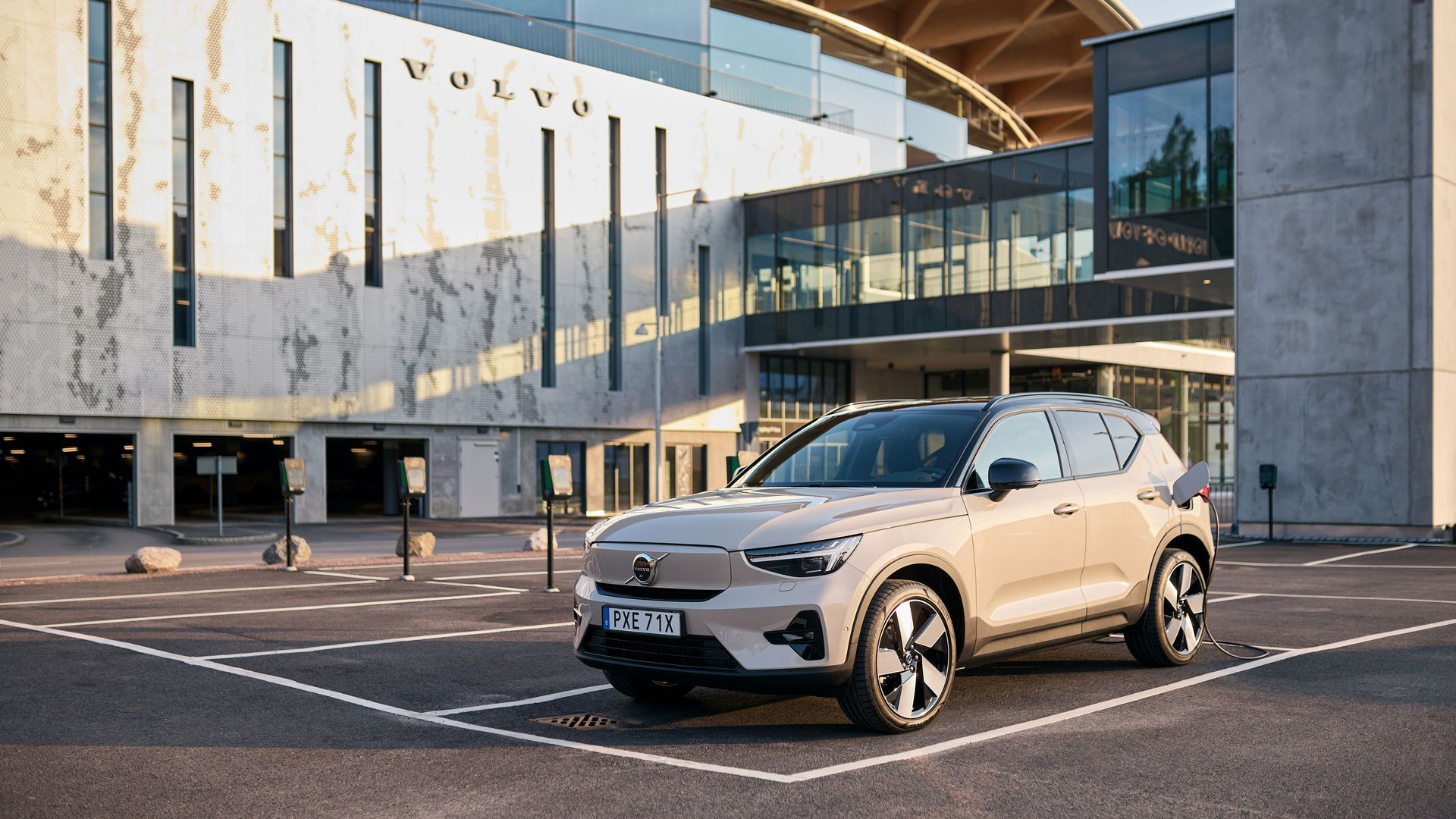
The Volvo XC90 and the BMW X5 are among the most recognized large luxury SUVs on the market. They are often on the shortlist of Montreal families looking for a vehicle that combines prestige, capability, and plug-in hybrid power.
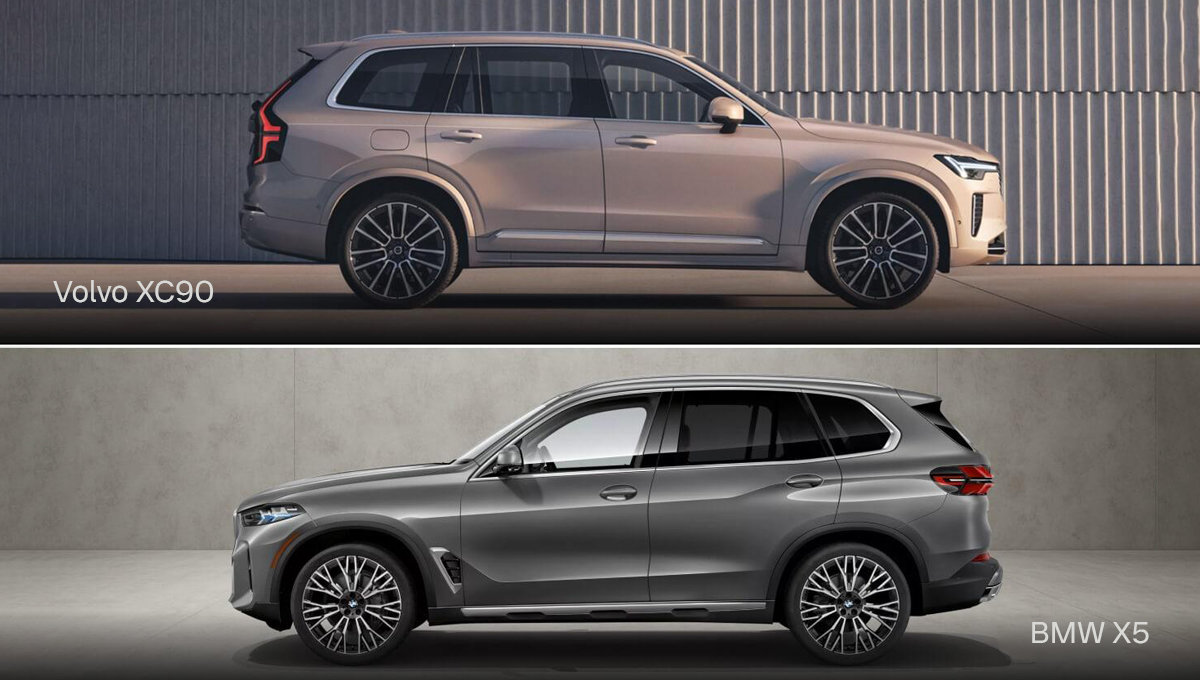
At first glance, they appear almost identical: 195 inches in length for the XC90 compared with 194.3 inches for the X5. However, this exterior similarity hides a fundamental difference that many buyers only discover when they visit a dealership. In 2026, the BMW X5 is a two-row SUV seating five passengers, while the Volvo XC90 comes standard with three rows accommodating six or seven occupants.
The Difference That Specifications Don’t Show at First Glance
Both vehicles have nearly identical exterior dimensions. Inside, however, the XC90 offers three full rows, with 37 inches of second-row legroom and 31.9 inches in the third row. It also provides a maximum cargo capacity of 85.7 cubic feet when all rows are folded down.
The 2026 BMW X5, meanwhile, comes standard with two rows and five seats, offering a maximum cargo capacity of 72.3 cubic feet. A third row was previously available as an option on certain X5 versions, but the current model — in its final production year before its next-generation redesign — no longer offers it in the plug-in hybrid (PHEV) version.
The reason is simple: the X5 xDrive50e’s 29.5 kWh battery occupies the space beneath the cargo floor where the optional third row, spare tire, and additional storage compartment were previously located.
For a family with three children or for those travelling with grandparents on Highway 15 toward the Laurentians, this difference becomes a decisive factor.
Comparison Table: Volvo XC90 T8 PHEV vs BMW X5 xDrive50e (2026, Canada)
| Category |
Volvo XC90 T8 PHEV |
BMW X5 xDrive50e |
| Starting price (Canada) |
~$96,900 (Ultra T8) |
~$98,500 (typical configurations) |
| Rows / Seating capacity |
3 rows / 6 or 7 seats |
2 rows / 5 seats |
| Powertrain |
2.0L turbo + electric motor, 455 hp combined |
3.0L turbo inline-6 + electric motor, 483 hp combined |
| 0–100 km/h |
~4.8 seconds |
~4.6 seconds |
| Electric range |
53 km (Natural Resources Canada certified, Volvo Canada) |
~61 km (Canadian BMW dealer data) |
| Battery |
18.8 kWh (14.7 kWh usable) |
29.5 kWh (25.7 kWh usable) |
| AC charging |
~5 hours (6.4 kW) |
~2.5 hours (11 kW) |
| Towing capacity |
2,268 kg (5,000 lb) |
3,266 kg (7,200 lb) |
| Maximum cargo volume |
85.7 cu. ft. |
72.3 cu. ft. |
| All-wheel drive |
Standard AWD |
Standard xDrive |
| 2026 NHTSA rating |
5 stars |
4 stars |
| 2026 IIHS rating |
Top Safety Pick+ |
Not evaluated (2026) |
| Google built-in |
Yes, standard |
No (Apple CarPlay standard) |
| Included maintenance |
4 years / 80,000 km |
3 years / 60,000 km (2022–2026) |
Plug-In Hybrid Powertrains: Different Strengths on Both Sides
The Volvo XC90 T8 PHEV combines a 2.0-litre turbocharged and supercharged gasoline engine with a rear electric motor, producing a combined 455 horsepower and standard eAWD. Its electric range, certified by Natural Resources Canada (NRCan), is 53 km. Its 18.8 kWh battery can be fully charged in approximately five hours using a Level 2 charger (6.4 kW).
The BMW X5 xDrive50e uses the B58 turbocharged inline-six engine producing 289 horsepower, combined with a 194-horsepower electric motor, for a total output of 483 horsepower — 28 more horsepower than the XC90 T8.
Its 29.5 kWh battery (25.7 kWh usable) can be charged on a Level 2 charger in approximately 2.5 hours at 11 kW, making it about twice as fast to recharge as the XC90. Its electric range is approximately 61 km according to data published by Canadian BMW dealers.
BMW does not publish a separate NRCan rating on its official Canadian website. Like the XC90, the X5 PHEV does not support DC fast charging.
For a Westmount or Outremont owner who charges at home every night, the X5 PHEV reaches a full charge in only 2.5 hours compared with approximately five hours for the XC90 — a valuable advantage when charging access is limited in the evening.
Safety: Two Stars of Difference and an Additional Certification
The 2026 Volvo XC90 receives an overall five-star rating from the National Highway Traffic Safety Administration (NHTSA), while also earning the IIHS Top Safety Pick+ designation, the highest award given by the Insurance Institute for Highway Safety.
The 2026 BMW X5, on the other hand, receives an overall four-star NHTSA rating. At the time this article was published, it had not yet been evaluated by IIHS in its current generation.
All XC90 models come standard with Volvo’s IntelliSafe suite of technologies, including:
- Pilot Assist (semi-autonomous driving assistance);
- Automatic emergency braking in urban environments;
- Pedestrian, cyclist, and large animal detection;
- Lane Keeping Aid;
- Cross Traffic Alert with automatic braking;
- Road Sign Information;
- Rear Collision Mitigation Support.
On the BMW X5, several comparable technologies are available through paid option packages.
The Montreal Reality: Three Rows on Highway 15, PHEV Efficiency on Décarie Boulevard
Two typical situations experienced by Montreal drivers perfectly highlight the differences between these two vehicles.
Scenario One: Weekend Trips to the Laurentians
On Friday evening, a family of five or six leaves Town of Mount Royal or Côte-des-Neiges with luggage, skis, or outdoor equipment heading toward Mont-Tremblant or Saint-Sauveur.
In this situation, the XC90’s third row is not simply a luxury — it becomes essential.
The 2026 BMW X5 xDrive50e simply cannot comfortably transport six adults, or five adults with a child seat, without significant compromises in passenger comfort or cargo space.
Scenario Two: Daily Urban Driving
On Décarie Boulevard, Monkland Avenue, or Côte-des-Neiges Road, the XC90 T8’s 53 km electric range covers the majority of daily round trips without using a single drop of gasoline.
In Pure mode, fully electric, the XC90 can carry up to seven occupants in remarkable silence — a capability that no 2026 BMW X5 version can match in terms of passenger capacity.
In winter, both vehicles require battery preconditioning to deliver optimal electric performance when temperatures drop below freezing. This is a common feature among plug-in hybrid vehicles used in Quebec between November and March.
Both the XC90 and X5 automatically manage this transition based on outside temperatures. However, neither model offers DC fast charging for longer journeys.
What the BMW X5 Does Better
This comparison would not be complete without recognizing the strengths of the BMW X5 xDrive50e.
It offers:
- A significantly larger battery (29.5 kWh versus 18.8 kWh for the XC90);
- Level 2 charging that is approximately twice as fast (2.5 hours versus 5 hours);
- Slightly higher combined power output (483 hp versus 455 hp);
- Much higher towing capacity (3,266 kg versus 2,268 kg).
Its B58 inline-six engine is recognized as one of the best in its segment.
Its sharper steering, sportier handling, and more dynamic chassis provide a driving experience more focused on performance than the XC90, which intentionally prioritizes comfort, refinement, and long-distance travel.
For buyers who do not need a third row and who are looking primarily for a sportier driving experience combined with a larger PHEV battery, the BMW X5 xDrive50e remains an excellent choice.
FAQ: Volvo XC90 vs BMW X5 in Canada in 2026
Does the BMW X5 offer a third row in 2026?
No. In its current 2026 version, the BMW X5 is a two-row SUV seating five passengers.
The third row, previously available as an option on certain configurations, is no longer offered on the 2026 model — mainly because the 29.5 kWh battery of the X5 xDrive50e plug-in hybrid version occupies the space beneath the cargo floor.
In comparison, the Volvo XC90 comes standard with a third row, allowing six or seven passengers depending on the configuration.
Is the XC90 T8 PHEV more affordable than the BMW X5 xDrive50e in Canada?
At comparable trim levels, the Volvo XC90 T8 PHEV starts at approximately $96,900 (Ultra T8 version), compared with approximately $98,500 for a typical BMW X5 xDrive50e configuration.
The price difference remains limited, but the XC90 offers an important advantage: a standard third row, while the X5 simply does not offer one on the 2026 model.
What is the certified electric range of the XC90 T8 PHEV in Canada?
Volvo Canada officially lists an electric range of 53 km for the XC90 plug-in hybrid, based on testing cycles approved by Natural Resources Canada (NRCan).
This figure comes from the official model information available through Volvo Cars Canada.
Is the XC90 rated safer than the BMW X5?
Yes, according to available data.
The 2026 Volvo XC90 receives a five-star NHTSA rating as well as the IIHS Top Safety Pick+ designation.
The 2026 BMW X5 receives a four-star NHTSA rating and has not yet been evaluated by IIHS in its current generation.
Which model is the best choice for a family of five or more in Montreal?
The Volvo XC90 is the most logical choice when passenger capacity is a priority.
It is the only one of the two models offering a standard third row in 2026, without additional cost.
For families of five or fewer who prioritize driving dynamics and a larger plug-in hybrid battery, the BMW X5 xDrive50e remains a serious competitor.
Is scheduled maintenance included on both vehicles in Canada?
Yes, both vehicles include scheduled maintenance programs.
The 2026 Volvo XC90 benefits from Volvo’s maintenance program covering 4 years or 80,000 km.
The 2022–2026 BMW X5 is covered by the No-Charge Scheduled Maintenance program, which includes scheduled service for 3 years or 60,000 km.
The XC90 therefore provides an additional year and 20,000 km of coverage.